The Crisis of Capitalism and the Logic of Imperialist Violence
The Dual Nature of Capital’s Crises
Under capitalism, a crisis always has within it a dual nature of destruction and creation.
For example, when two auto companies go bankrupt, a third company is able to buy them at a bargain price. The crises of capitalism allow for the system to reset itself, for the chess board to be flipped and the pieces repositioned. This is what happened after each of the first two World Wars, and after the collapse of the Soviet Union. On the surface, the situation for the imperialists seems to be decaying – but they can place their hopes in capital’s ability to destroy and then recreate. Put simply, the imperialists believe that if the international order cannot be realigned to serve them, they’re better off smashing it to begin anew.
This is not to say that their plan is to destroy the international economic, political, and legal order from top to bottom. Rather, different factions within the bourgeoisie – specific centers of capital looking to export into specific markets – are attempting to reassert US dominance in the respective spheres in which they operate. When faced with a choice between withdrawing and abandoning US dominance, or advancing and risking potential crisis, they usually choose to advance.
The cycle of destruction and subsequent ransacking is exactly what occurred after the fall of the Soviet Union. Russia’s industrial capacity was eviscerated when the nation’s stock of constant capital was sold off for pennies. A few investors were able to consolidate the remains – buying at absurdly low prices – and now constitute the ruling class of that country. The Russian Federation was never able to rebuild its manufacturing capacity, and devolved into an economy based on resource extraction. Unemployment skyrocketed and life expectancy fell, but the international bourgeoisie made a windfall.
Instability in West Asia
With this understanding, we can tie together the seemingly disparate crises in the world and identify how they derive from a single source – the expansion of finance capital through imperialist means.
Palestine is a critically important intersection for the flow of capital and resources, and as such the imperialists cannot allow the Israeli Occupation to collapse. However, on October 7, 2023, the Palestinian people made it clear to the imperialists that it would be impossible to pacify the population of Gaza. The imperialists were given the choice to either draw down the occupation, or engage in a genocidal onslaught.
This is the motivation for the genocide, the removal of a population (Palestinians) that the Occupation cannot control. Both US and Occupation leadership were clear that they wanted to pursue genocide from the very beginning. This determination to violate international law has certainly done damage to both US and Israeli military capabilities, credibility, and incurred the risk of sanctions. Despite this, it has brought about regime change in Syria and instability in Lebanon and Iran. By weakening so many of the oil-producing nations, the imperialists have increased their relative economic power. Further, the colonialist “Board of Peace” holds the potential for massive investments in real estate and construction.
The West and Ukraine
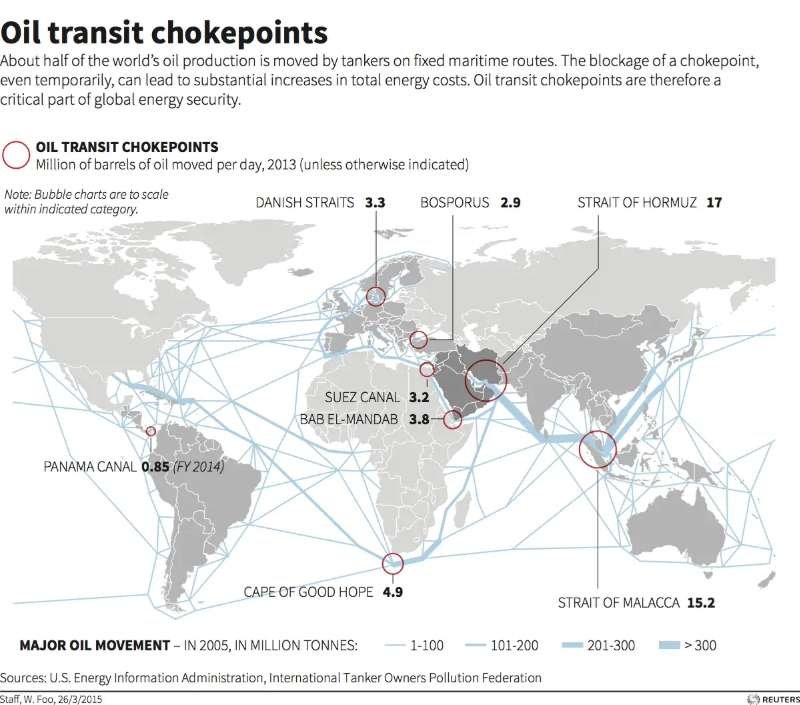
Controlling Ukraine and the Crimean Peninsula has tremendous strategic value. Control of this region provides an unfettered maritime route through the Black Sea to Turkiye and through the Bosphorus and Dardanelles Straits, ultimately allowing access to the Mediterranean and West Asia. A US withdrawal from the Ukraine conflict would be equivalent to handing Russia this coveted access, which the US is obviously unwilling to do. Likewise, withdrawal would solidify Russia’s overland access through Ukraine and Crimea to both Eastern and Western Europe.
Any destruction caused to Ukraine during this war is either incidental, or beneficial to international finance capitalists. In April 2025 Business Insider reported that European weapons manufacturers were planning to build up Ukraine’s weapons industry. Quoting a European economist, Business Insider stated,
It makes imminent financial and economic sense for especially richer Western European nations to directly finance the full utilization of expanding Ukrainian production capacity," he [Kirkegaard] said. Ukraine, Kirkegaard added, is a far cheaper place to manufacture weapons at scale than Western Europe, and it already has a growing and innovative defense manufacturing sector. Refocusing European arms production in Ukraine itself is a "win-win," he suggested, enabling Europe to cut costs, boost a crucial ally, and also see weaponry tested and refined on the battlefield.
This statement exemplifies Lenin’s thesis on imperialism. The war in Ukraine has provided Europe with a place to export money capital and constant capital, while spending less on variable capital. The longer the war lasts, the more that Ukraine is incentivized to be a capital importer. The more destruction incurred in Ukraine itself, the lower the price for which foreign investors can both purchase domestic means of production, and hire cheap Ukrainian labor.
The West and the South China Sea
A similar pattern has been playing out in the South China Sea for several years. The US, much to its chagrin, can do nothing to stop China from reunifying with Taiwan, nor can it halt the progress of China’s Belt and Road Initiative. But the imperialists refuse to withdraw – any damage they do to Taiwan (and its critical semiconductor industry), the Philippines, or any other US ally represents a tremendous investment opportunity for the ruling class. Pursuant to this, the Trump administration recently announced that Taiwan would begin investing in semiconductor facilities in the US due to Trump’s tariff policy. Whether or not this agreement comes to pass, it’s an example of the US shaking down its allies to find places to either export capital, or build up their own industrial capacity.
Trade Wars: The Domestic Situation
Tariffs have historically been used to protect domestic production. However, as Trump's critics have pointed out, the globalized economy makes it unlikely that US industry can be protected in this manner. These tariffs aim to increase the price of imported finished commodities. They also increase the price of minor and major components – such as the ones that US companies use in their own production.
Let’s look at an example. The automotive and tech industries source their components from too many countries for US companies to step in and fill the gaps. As a result of tariffs, US companies will have to buy some imported components at higher prices than their foreign competitors. This increase in the cost of constant capital puts their commodities at a price disadvantage on the global market. Given these disadvantages, why does the Trump administration (and certain factions within the bourgeoisie) want to advance this policy anyway?
The answer lies once again in the dual nature of the crisis of capital: even the destruction of US firms has a positive benefit. In the aftermath of economic devastation, the richest firms and investors can descend on the carcass and engorge themselves like vultures. The result is the consolidation of capital, the primary goal of the capitalist economic system.
Surplus Value in a Service-Based Economy
Domestically, products and services are seeing a decline in quality and an increase in cost. These rising costs are primarily due to issues in trade stemming from COVID. The decline in the quality of products and services, however, is caused by a reduction in the number of workers per shift. This reduction has been reported by every worker that we as a party have organized. By reducing the number of workers per shift, the cost of variable capital decreases. If production remains at the same pace, the amount of surplus value extracted by the bourgeoisie increases. As the transition to a service-based economy advances, the pace of production is primarily maintained by the number of customers rather than by the policies of managers. Long lines of customers prevent workers from taking breaks or relaxing the pace of production, which increases the total labor time extracted from the individual worker. The fewer workers on shift, the more service is backed up, the longer the lines which create pressure to produce at a faster pace.
This makes the service much worse, but the benefit to the capitalist is obvious. Increasing labor time per worker makes up for the decrease in labor power that would normally come from reducing the number of workers per shift. Therefore, we can expect that the capitalists will continue to cut staffing, decrease the quality of products and services, and increase their share of surplus value.
If workers rebel against this, the bourgeoisie can rely on the state to protect them. That is a major reason for the current flagrancy of state violence, exemplified by the recent waves of ICE raids.
By making a public spectacle of its violence, the state believes it can remind migrants and workers as a whole that they can be targeted and crushed. Additionally, these raids are carried out for the purpose of lowering wages by means of terrorism. They discourage migrants from organizing and force them to accept lower wages and terrible working conditions as the cost of avoiding attention from the state.