Why Have US Marxist-Leninists Abandoned Base Building?
On Mass Work and the Contradictions Within the Left
Mass Work and Dual Power
Recently, there has been discussion about the absence of base building or “mass work” – deep organizing within the working class to prepare for socialist revolution – among Marxist-Leninist Parties in the US. But the construction of a mass base is a precondition for any socialist revolution, and in previous movements it was taken as a given that this mass work would make up the bulk of any communist party’s effort. For example, several months before the October Revolution, Stalin said:
“The revolutionary [Bolsheviks] must work to consolidate these Soviets [ed. lit. “Councils”], form them everywhere, and link them together under a Central Soviet of Workers' and Soldiers' Deputies as the organ of revolutionary power of the people.”
This is precisely what the Bolsheviks went on to do. The accelerated the creation of councils, linking them together under a central council of workers’ and soldiers’ representatives, and that action was decisive in the victory of the revolution.
In 1927, declaring that “Organizing the Peasants into Peasant Associations” was one of the fourteen great achievements of the Hunan Peasant Movement, Mao stated:
“In counties like Hsiangtan, Hsianghsiang and Hengshan, nearly all the peasants are organized and there is hardly a remote corner where they are not on the move… According to the figures compiled by the provincial peasant association last November, organizations with a total membership of 1,367,727 have been set up in thirty-seven of the province's seventy-five counties… By the end of January the membership must have reached at least two million. As a family generally enters only one name when joining and has an average of five members, the mass following must be about ten million. This astonishing and accelerating rate of expansion explains why the local tyrants, evil gentry and corrupt officials have been isolated, why the public has been amazed at how completely the world has changed since the peasant movement, and why a great revolution has been wrought in the countryside. This is the first great achievement of the peasants under the leadership of their associations.”
The motivation for building such councils and associations is to create the conditions for dual power – the situation wherein the embryo of the dictatorship of the proletariat begins to form alongside the existing dictatorship of the bourgeoisie. The resulting struggle between the two inevitably leads to the victory of the proletariat and the defeat of the bourgeoisie. Lenin described this phenomenon as it was occurring for the first time in 1917:
“The basic question of every revolution is that of state power. Unless this question is understood, there can be no intelligent participation in the revolution, not to speak of guidance of the revolution.
The highly remarkable feature of our revolution is that it has brought about a dual power… What is this dual power? Alongside the Provisional Government, the government of bourgeoisie, another government has arisen, so far weak and incipient, but undoubtedly a government that actually exists and is growing—the Soviets of Workers’ and Soldiers’ Deputies…
This, and this alone, constitutes the essence of the Paris Commune as a special type of state. This essence has been forgotten or perverted by the Plekhanovs (downright chauvinists who have betrayed Marxism), the Kautskys (the men of the “Centre”, i.e., those who vacillate between chauvinism and Marxism), and generally by all those Social-Democrats, Socialist-Revolutionaries, etc., etc., who now rule the roost.”
After Lenin, communist parties set out immediately to recreate this phenomenon from first principles. Therefore, the movement of US communist parties away from mass work – the refusal to create the conditions for dual power – over the last forty years seems incredibly counterintuitive. However, this regression is in fact an inevitable manifestation of the principal contradiction within the US socialist movement; the contradiction between (1) the interests of the working class in developing a proletarian class dictatorship and (2) the material interests of the petit-bourgeoisie and its resulting influence on Marxist organizations.
The Influence Of The Petit-Bourgeoisie On Marxism
Lenin’s comments about the 1871 Paris Commune and the right-leaning socialists who, by 1917, had forgotten its lessons, imply that right-opportunism is something that takes hold of the revolutionary movement in a cyclical fashion – particularly when the class struggle is less acute. Stalin’s commentary in 1924 encapsulates this succinctly:
“I have already said that between Marx and Engels on the one hand, and Lenin, on the other, there lies a whole period of domination of the opportunism of the Second International… the main work of the Second International followed the line of opportunism. The opportunists adapted themselves to the bourgeois because of their adaptive, petty-bourgeois nature... This was the period of the relatively peaceful development of capitalism, the pre-war period, so to speak, when the catastrophic contradictions of imperialism had not yet became so glaringly evident… in short, when the parties of the Second International were living in clover and had no inclination to think seriously about revolution, about the dictatorship of the proletariat, about the revolutionary education of the masses.”
Why would the most politically educated and politically active adherents of Marxism reject or ignore one of the central questions of Marxism (the dictatorship of the proletariat)? The explanation lies in the class origins of Marxism itself:
“The theory of socialism, however, grew out of the philosophic, historical, and economic theories elaborated by educated representatives of the propertied classes, by intellectuals. By their social status the founders of modern scientific socialism, Marx and Engels, themselves belonged to the bourgeois intelligentsia.” - Lenin, What Is To Be Done?
What Lenin is saying here is that the development of scientific socialism – dialectical and historical materialism – required the intense study of science and history. The class whose position in the economy mandates training in that study is the petit-bourgeoisie. By contrast, the daily work of the proletariat does not lead one towards the sciences and humanities. In fact, the exhausting nature of proletarian labor, and the resulting impoverishment of the worker, leads one away from such studies and erects barriers when the interest arises.
This is the source of the contradiction. The class which continuously rediscovers the Marxist theory of social change is a class whose material interests often stand in opposition to Marxism. The petit-bourgeoisie who are pinned between the working class and the capitalist class, their interests vacillating from one to the other, work as small business owners (engaging in ruthless, nearly unregulated exploitation) or serve as administrators or propagandists for the capitalist ruling class. The material basis of the petit-bourgeois class is at odds with the interests of the proletariat. This contradiction is particularly acute in the United States.
The 2023 Bureau of Labor Statistics (BOL) Report states that 27 percent of our economic output is made up of Financial Activities (14.4%) and Professional and Business Services (13.2%), making up 27.6 percent of our economy (nearly $10.7 trillion). On the other hand, Manufacturing, Construction, Utilities, and Agriculture make up only a combined 20.9 percent of our economy.
For clarity, the BOL breaks down the Financial Activities supersector into Finance and Insurance, “compris[ing] establishments primarily engaged in… transactions involving the creation, liquidation, or change in ownership of financial assets… and/or in facilitating financial transactions…” and the Real Estate, Rental, and Leasing sector which, “comprises establishments primarily engaged in renting, leasing, or otherwise allowing the use of tangible or intangible assets.” These industries represent capital and are the primary forms of employment for the ruling class.
Amongst Professional and Business Services the BOL lists professions such as, Legal Services, Accounting, Architectural and Engineering, Computer Systems Design, Consulting Services (Management, Scientific, or Technical), Scientific Research and Development Services, Advertising and Related Services, Office Administrative Services, as well as the industry sector known as “Management of Companies and Enterprises”. These professions make up a large portion of the petit-bourgeoisie and many of these occupations make up the administrative support structure for the bourgeois sectors named above.
Our economy is not designed around production and infrastructure. It is designed around finance and the industries required to maintain it. When workers take power they will almost immediately set out to radically shift our economic output away from finance, real estate, and insurance and towards manufacturing and infrastructure. The economy will shift away from surplus value extraction and toward expanding the forces of production, increasing the material resources available to the working class.
Proletarianization of the economy will lead to a severe employment contraction in many petit-bourgeois professions (office management, consulting, law firms, etc.) and at the same time close off the possibility of ascending into the finance-oriented capitalist ruling class. The dictatorship of the proletariat therefore represents the proletarianization of the petit-bourgeoisie – casting them downwards into a class which is forced to toil rather than send emails or tinker with spreadsheets. The petit-bourgeoisie therefore fear the dictatorship of the proletariat, and even fear the working class itself.
The Role of the Party
Class interest provides an important lens for analysis, but it is not deterministic. Nor is class identity a mark of shame — petit-bourgeois class origins are not some original sin from which its members can never escape. As alluded to before, many of history’s greatest revolutionaries came from the petit-bourgeoisie or its equivalent class in their country of origin; Marx, Lenin, Mao, Castro, etc. What is at issue is the unity between the politically educated Marxists in the petit-bourgeoisie and workers engaged in class struggle whose material interests point towards revolution. The lack of such unity allows the contradiction to sharpen, which then continues to accelerate if not challenged head on.
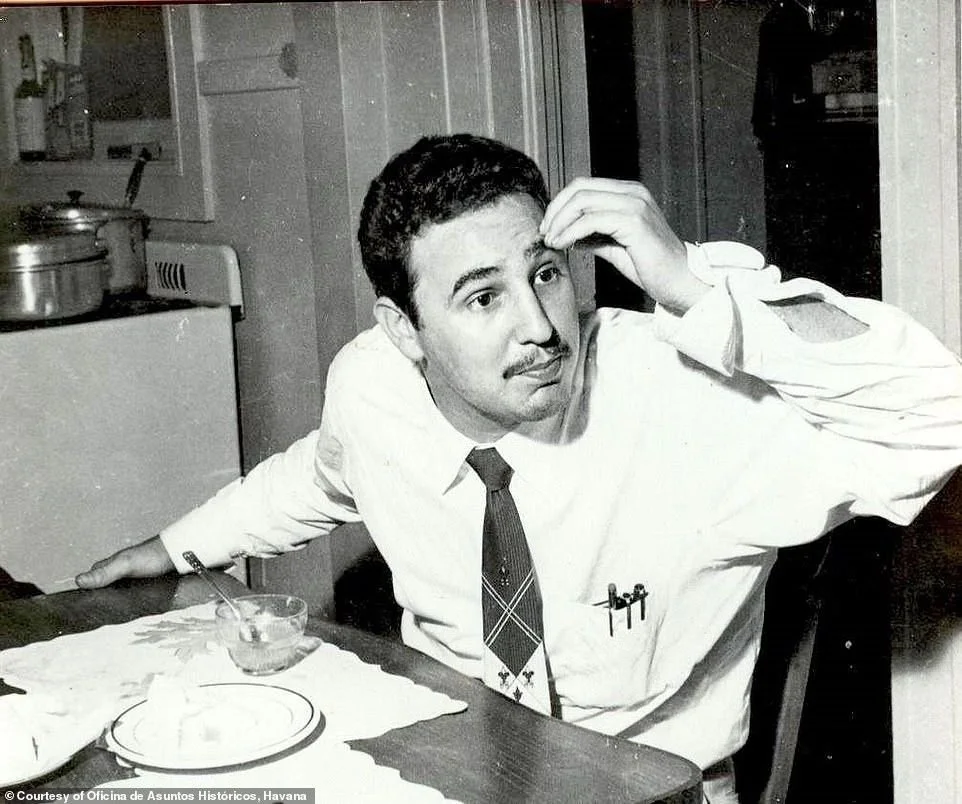
Fidel Castro, before abandoning his career as an attorney to lead the Cuban Revolution
US Marxist-Leninists have sought to manage the contradiction — between the goals of Marxism and the petit-bourgeois fear of workers power — not by confronting it, but by adopting a tailist strategy. In this case, tailism manifests as the belief that the masses will spontaneously revolt (perhaps after having their consciousness raised by the agitation of communists), at which point a communist party will take leadership of the masses, and then the revolution. No revolution has ever succeeded in this way, but this strategy has the benefit of keeping the masses (and their troublesome contradictions) at a safe distance.
Instead of gathering the working class around them to form the embryo of the proletarian dictatorship, US Marxist-Leninists opt for an almost purely agitational strategy which mainly targets other disaffected members of the petit-bourgeoisie. I list here several examples, not to undermine the hard work of cadre in various organizations, but to substantiate my argument with evidence and encourage all Marxist-Leninists, regardless of party affiliation, to struggle along the most direct path to socialist revolution. The needs of the working class struggle supersede personal or organizational pride.
The most articulate formulation of this strategy which I have found comes from the Freedom Road Socialist Organization. I believe it encapsulates the thinking – in one way or another – of all the major US Marxist-Leninist parties:
“Sometimes it happens that the best way to get a campaign going is to unite the advanced to carry out an action (such as a sit-in or visible confrontation with the governor, mayor, etc.). This in turn galvanizes the advanced core, puts up a pole of resistance that others can rally around, and creates a context where we can have a fight for public opinion.”
The “pole of resistance”, elsewhere called the “left pole”, postulates the objective of forming a political pole within the broader coalition of the working class struggle. This pole represents the Marxist-Leninist position and, via agitation, the workers movement is expected to gradually move towards it.
The CPUSA’s party program eschews specifics (“We do not propose any detailed plan for exactly how this transition will come about, since it will depend on the specific circumstances at the time.”), but they do state:
“The role of the Party during each stage of struggle leading up to socialism is to combine participation with the millions in struggles where they are at, agitation for the next phase of struggle, and advocacy for socialism, linking activism in the struggles of the present with preparation for the struggles of the future.”
If my interpretation is correct, this lines up neatly with FRSO’s strategy. That is, to work within ad hoc, spontaneous coalitions of the most active masses (mostly disaffected petit-bourgeoisie) and explain the socialist political line in the hopes that this line will be taken up and lead to the further advancement of the struggle. What’s most striking is that this line of thinking abdicates the leadership position which communist parties have historically sought to fill. It takes a mechanical view of historical development, implying that social transformation occurs primarily through objective changes to material conditions, sidelining the impact of the subjective change which communist parties have long sought to instigate. This is an abdication of responsibility which Lenin found impermissible:
“What we are discussing is the indisputable and fundamental duty of all socialists — that of revealing to the masses the existence of a revolutionary situation, explaining its scope and depth, arousing the proletariat’s revolutionary consciousness and revolutionary determination, helping it to go over to revolutionary action, and forming, for that purpose, organizations suited to the revolutionary situation.” — ‘The Collapse of the Second International.’
Lenin viewed the subjective factor as decisive because objective material conditions have never been enough to create revolutionary change on their own:
“[I]t is not every revolutionary situation that gives rise to a revolution; revolution arises only out of a situation in which the above-mentioned objective changes are accompanied by a subjective change, namely, the ability of the revolutionary class to take revolutionary mass action strong enough to break (or dislocate) the old government, which never, not even in a period of crisis, "falls", if it is not toppled over.”
The “left pole” strategy makes no attempt to explain how the subjective forces of the revolution (the party and the most active workers) will take revolutionary mass action. It makes no attempt to explain how – in the absence of mass work – the proletariat will develop the strength to take revolutionary mass action. Instead, the left pole strategy takes a passive, observational approach, focusing on what Lenin called the “period of crisis”, a condition insufficient to produce revolutionary change on its own. In July of this year at Socialist Summer School at TPF, the cofounder of the Party for Socialism and Liberation, Brian Becker, spoke about the crisis period at length:
“You never know when the trigger is, so we do all of our preparatory work; building an organization, making it function properly, and all of the educational work. Only in a situation if we think there are multiple cascading crisis that will become a real shock – and that’s what we think is coming, and we think it’s a solid analysis. Those triggers will present themselves. And I think those will become the motivators for people who are not now motivated for political action…
The big shocks to the system – if you have war and major climate catastrophe such that we can’t even imagine yet, in the next five or ten years – the American ruling class, which is already destabilized, will not be able to manage the situation. That is going to create the moment for revolution. The reason we have created a political party is not because the party makes revolution – the people make revolution. But the people must have a leadership that has experience, is grounded in perspective, and has training in terms of how to function. That’s the reason we built the PSL, for no other reason.”
While Becker speaks about providing leadership, he does so after explaining that the cascading crisis faced by the ruling class – in which Marxists seemingly play little part – will create the necessary preconditions for revolutionary action. Again, this contrasts sharply with Lenin’s formulation that the communist party must be part of the dialectic – both influenced by the political situation and influencing it – so that the cascading spiral can be pushed towards its breaking point. We are the crisis. We cannot stand outside of it – observing in preparation for the right moment to enter the fray.
Proletarianizing the Struggle
If the material interests of the petit-bourgeoisie inevitably come to exert pressure on the political direction of the workers struggle, how does the revolution correct course? What all socialist revolutions need is proletarianization. Proletarianization means infusing the struggle with the material interests of the proletariat and leading the struggle according to the ideology of dialectical materialism. In sum, embracing the dictatorship of the proletariat in both word and deed.
This process requires one to accept the need to liquidate the material basis for the petit-bourgoisie as a class. This is the subjective decision which all revolutionaries (from either the petit-bourgeoise or the working class) have to make in order to pursue socialism. Following from this, a political plan of action can be developed which directly addresses the tasks of building a socialist economy.
Said plan must be devoted to drawing greater and greater numbers of the working class into both the wider movement and the communist party itself. When a communist party’s membership is dominated by the working class (a process which is always protracted), the material interests of the working class provide an economic basis for the party’s ideological decisionmaking. Likewise, when the party has gathered large numbers of workers around them in mass organizations, and has established deep links and constant communication with the workers, the proletarian perspective of the party is further reinforced.
Proletarianization also requires an unflinching demand for evidence, drawn from investigation into the working class, as the central guideline for the party’s action. Mao referred to this as the “mass line” and his formulation clearly explains how the Marxist theory of knowledge is applied to the working class struggle:
“In all the practical work of our Party, all correct leadership is necessarily "from the masses, to the masses". This means: take the ideas of the masses (scattered and unsystematic ideas) and concentrate them (through study turn them into concentrated and systematic ideas), then go to the masses and propagate and explain these ideas until the masses embrace them as their own, hold fast to them and translate them into action, and test the correctness of these ideas in such action. Then once again concentrate ideas from the masses and once again go to the masses so that the ideas are persevered in and carried through. And so on, over and over again in an endless spiral, with the ideas becoming more correct, more vital and richer each time. Such is the Marxist theory of knowledge.”
Without an evidentiary basis, the political ideas of the communist party – no matter how moral or just they sound – cannot and will not lead to the defeat of the bourgeoisie or the construction of socialism. Without evidence, parties inevitably fall into some form or another of utopian socialism, the ideology of the petit-bourgeoisie. Utopian socialism, because it is idealist rather than materialist, continuously comes into contradiction with material reality. These contradictions mount and in the end, utopian socialism always succumbs to the pressures of the material world.
The Practice of the Multinational Communist Party
The Multinational Communist Party, like any other communist party, must be willing to subject itself to criticism. The criticism must come not only from within, but also from those in the wider struggle. Absent outside criticism, the MCP can only view itself from a single perspective. Over time, the distortions inherent in such a two dimensional view will lead to greater and greater errors in our analysis. Countering this requires a degree of transparency about our work (moderated by reasonable safety precautions). Therefore, the summation of this article will be demonstrated through the MCP’s practice of the mass line over the last four years – an experience which has been uneven and met with both successes and failures.
Our work starts with the responsibility of all cadre to establish contacts with the working class. Cadre canvas door to door in low-income working class neighborhoods agitating around the most pressing current issues and asking residents to begin organizing campaigns in their workplace. Many new cadre experience apprehension at the thought of direct canvasing, but overcoming this trepidation is the first step in escaping a petit-bourgeois idealist conception of the working class and developing a materialist evidence-based understanding. The first step in proletarianization is to overcome atomization and begin political work with the working class directly.
Workers who respond to our outreach are brought to Workers Council meetings, or trained to form steering committees for a workplace organizing drive. In either case, during these meetings cadre lead political education on the fundamental concepts of Marxism-Leninism. Then, they interview the workers about their grievances, taking detailed notes and offering Marxist explanations for the actions of their employer. Finally, cadre and workers develop a plan of action – at the current stage of the struggle, this usually entails organizing coworkers for a union campaign, or preparing to picket or strike.
At weekly Local Party Committee meetings, cadre report what they’ve been told by workers, analyse the issues together through a Marxist lens, and develop a plan to advance their campaigns over the following week.
Summaries of these reports are brought by local leaders to meetings of the Central Committee where further discussion and analysis takes place. The Central Committee lays special emphasis on measuring the results of the MCP’s organizing against its planned objectives. There is almost always a gap between intention and execution, and we evaluate ourselves not by the existence of a discrepancy, but by how well and how consistently we are able to shrink the gap.
The MCP’s strategy advocates for workers to engage more frequently and more intensely in strikes, with the objective of building the capacity for local, regional, and eventually national general strikes. We also explain to workers why the leadership of the labor movement has turned away from work stoppages, and how this has weakened the struggle.
However, we understand that we cannot engage in commandism. Our political objectives will not be accepted as if from on high. This is why the Central Committee continuously measures our political line against the concrete results of the workers with whom we struggle. Our line is refined through these comparisons and the Central Committee explains those refinements through directives to cadre. Cadre debate and discuss the party line and test it in their worker organizing, and all of the information is summarized and reported back again. This cyclical, sometimes chaotic process is gradually rooting our party in the working class, helping us develop an understanding of its needs, and teaching us how best to direct worker mobilization against the bourgeoisie. This is the means by which we proletarianize the party and the method through which worker steering committees and councils will form the building blocks of a revolutionary mass base.
But this is not enough. Hundreds and thousands more communists must throw themselves into the difficult work of mass organizing. Millions of workers need to be organized. The scale of the task is enormous and can only be achieved by the most diligent and consistent coordinated effort. For many of us, our education in the petit-bourgeois fields has not prepared us for this level of cooperation, and we often lack the grit or the humility to endure the rigors of mass organizing. The first thing one learns when talking to workers is that they do not care about your political ideas unless you can first explain to them how those ideas will improve their lives. This gets easier over time. The dictates of the struggle force cadre to combat their liberal, petit-bourgeois leanings. But it is work that has to be done earnestly and honestly, and considering the state of imperialism, must be joined urgently. US communists must engage in self-criticism. Contradictions must be confronted.